
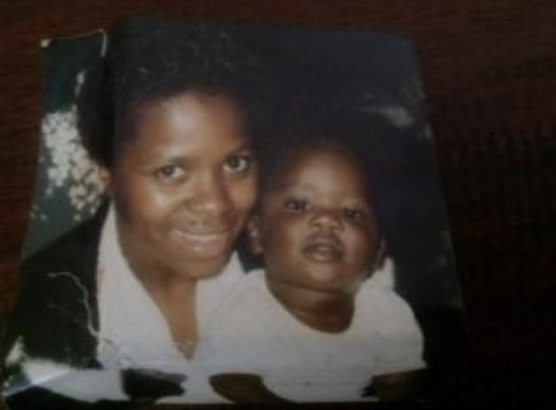
My first pregnancy occurred when I was just 16. I was far too young,
and it ended in a termination,
a decision shaped by circumstance and vulnerability.
At 20, I gave birth to my beautiful son.
It was a fairy-tale birth:
natural, uncomplicated, and profoundly empowering.
That experience transformed me.
I needed to understand what had happened to me,
physically, emotionally, spiritually.
So, I trained to become a midwife.
Nine months after my son’s birth,
My relationship ended.
I was a single parent,
and my third pregnancy, also with the same partner,
resulted in another termination.
It was a painful but necessary choice in the context of my life at the time.
Twenty-one years later, at age 43,
I became pregnant again.
My daughter was born prematurely at 26 weeks. She lived for 30 precious days.
Her brief life and passing reshaped me in ways I’m still discovering.
Embodiment, visibility, and the nuanced politics of disability, emotional expression, symbolic gestures, and healing my identity.
As part of the Melbourne Fringe Festival, I participated in an event at The Edge, presented under the auspices of The Rabble. Their production, UNWOMAN, invited participants to share stories of fertility, pregnancy, and birth, but it also welcomed those who had never been pregnant or given birth.
I wanted to show up fully, not just as a speaker, but as someone navigating the stage as a black woman with a disability, with grace and authenticity. I did not want to hide the reality of my situation being a disabled black woman. I reassured myself that showing up with authenticity, even with nerves and mobility challenges, was not just acceptable, it was powerful.
Inside Out, Calm Within
As I waited for the event to begin, I found myself having a quiet conversation with myself: Should I take the script that I had prepared on stage with me? I looked down and considered the logistics. I would be walking with my stick, carrying a piece of fabric, a prop, and then came the practical dilemma. Where would the paper go? Would I fumble with it? Would it distract from the moment?
It was just before 2:00 PM, and the event was about to begin. I sat quietly, reflecting in my own space, grounding myself for what was to come. Then, gently, a tap on my shoulder. The woman seated behind me leaned forward and softly let me know that my dress was inside out. It was not the kind of dress where the difference between inside out and outside in was obvious.
And at that moment, I paused. I could have spiraled, felt embarrassed, flustered, or anxious. But instead, I felt a deep sense of calm. I turned to her and said, “Oh well, that’s the problem when you live alone and have poor eyesight, you don’t always realise these things.”
The Dress
The young woman I had briefly spoken to earlier leaned over and said gently, “Oh… I don’t think anyone would notice. I’m not sure it was helpful of her to tell you that right now.” She was trying to reassure me, but I could feel the question hanging in the air: *What should I do?
So, I turned back to the woman who had noticed that my dress was inside out, and asked her, “What do you think I should do?” She immediately replied, “Well, there’s a green room over there, you could go and turn it the right way around.”
I paused. Oh, I considered it don’t think I didn’t. For a split second, I pictured myself springing up like a startled meerkat, flustered and fiddling with the dress in full view of a slowly assembling audience. Nothing says “professional” like a live demonstration of wardrobe malfunction. Alternatively, I could limp off to the green room, work myself into a sweaty panic, and wrestle with the dress in a space that might be neither accessible nor remotely soothing. All this drama… for what? To appease a woman I had never met, who was mildly offended that my dress was inside out. A dress, mind you, that looked almost exactly the same either way. Honestly, if it weren’t for the tag flapping like a tiny white surrender, no one would have noticed.
In that moment, I made a choice: I stayed seated. I chose calm over panic, grace over self-consciousness. I chose to stay present, presence over perfection. I reminded myself why I was there: to tell a story that mattered. To honour the courage, it takes to show up as I am, even in an inside-out dress.
This was not a performance of flawless presentation. But a small, steady gesture of self-acceptance. And in that stillness, I found my footing. My dress may have been inside out, but I was exactly where I needed to be, just as I was. This was my quiet act of defiance,
The Label
I turned around and returned to my meditative state, grounding myself before the event began. But I couldn’t help reflecting on the curious moment that had just unfolded. The woman behind me had leaned forward to tell me, just minutes before the show, that my dress was inside out.
It struck me: how focused must she have been on me? On the back of my neck? The label was tiny, barely visible. And yet, it had captured her attention so completely that she felt compelled to speak.
I wondered what it meant, that in a room full of people, her gaze had landed on me, and the one thing she felt compelled to comment on was my dress. Not my presence. Not the story I was about to tell. Not my readiness to speak, nor the fact of my Blackness or my visible disability. Just the orientation of a garment that, truthfully, looked almost identical either way.
It made me think about visibility. About scrutiny. About the bizarre distinctions of what draws attention and what earns judgment. The small ways we are noticed, and the even smaller ways we are measured.
Lifted
I was a little nervous about going up on stage. I didn’t want to trip. I didn’t want to embarrass myself in front of an audience. I took a breath and shared my vulnerable thoughts: with a team member from the event, She listened, nodded, and reassured me gently: “I will be there.”.
As I watched the other participants take the stage, I noticed something quietly significant: many of them were disabled, and yet few were being offered assistance. I was participant #31, which meant I had thirty chances to observe, thirty moments to study how people moved, how they navigated space, and what to be aware of. And with each one, I grew more confident. I felt ready. I believed I could do this on my own.
And so, when my turn came,
I turned to the woman who had been assigned to support me, offering help in whatever way I needed, and said, “I think I’m going to be OK.”
She looked at me, steady and firm. “No,” she said. “I’m going to escort you.”
And so we went up in the lift, together.
As the platform rose, I felt a wave of emotion. I had to go inward, to steady myself. There was a part of me that wanted to shrink, that felt thoroughly embarrassed, knowing that every person in the theatre could see I wasn’t climbing the stairs. That I couldn’t climb the stairs.
I marinated in that feeling. I let it speak. I let it settle. The lift was slow, almost comically so, but I was grateful for it. That gentle ascent gave me time to settle my nerves, to get my butterflies flying in formation. The stage was only about eight steps away, But the lift gave me space to breathe, to prepare, to arrive. I was ready to be seen as vulnerable, to tell my story, a story I have rarely shared, not even with some members of my own family. Perhaps because full truth, with all its messiness, might be too confronting. But I was ready.
Butterflies and Stillness
Then it was my turn.
Then I heard, somewhere inside of me “Don’t you worry. It’s going to be OK.” You can do this, “I think I’ll be alright.” I turned to the young woman beside me and I said, “I’m actually OK.” But she insisted
“No…. I’m going to escort you.”.
When I stepped onto the stage, something shifted. I entered a state of pure meditative bliss. There was no audience, no nerves, no noise, no expectation. Just me, speaking. I had no script. I took my time. standing in the fullness of my story. Present. Ready. I let each word land with intention; the moment I spoke the final word; I returned to my body. It was as if I had travelled somewhere deep and sacred, and the last word was the tether that brought me home.
The Last Word
As I moved to the other side of the stage, the woman who had accompanied me earlier was there again. She helped me place my plait on the chain, another symbolic gesture, and then, with quiet respect, allowed me to walk down the stairs on my own. No assistance. Just trust.
As I made my way back to my seat, my friend came running toward me and wrapped me in the biggest hug. It was a truly fantastic event, one that has given me the confidence to tell the truth. To tell my story. To name each pregnancy, each experience, each loss. I’m beginning to unpack who I am, without shame. I’m honouring what has shaped me into the woman I am today.
A Gentle Confirmation
As I settled back into my seat, still holding the warmth of my friend's embrace and the quiet triumph of having shared my story, the woman behind me tapped me gently on the shoulder once more.
“You’re right,” she said. “I didn’t notice that your dress was inside out.”
Her words landed softly. Not as an apology, but as a quiet confirmation. Recognition that what had seemed urgent earlier was, in the end, inconsequential. I smiled, not out of vindication, but out of peace. Because I knew all along, it didn’t matter. What mattered was showing up, speaking truth, and standing in the fullness of who I am. And still, I chose calm. I chose to stay seated, to stay present, and to honour the story I came to tell.
And it was because I showed up. Because I spoke. Because I stood, not despite my disability, but with it. Fully present. Fully myself. It was a moment of resolution, of quiet self-assurance.
Standing on that stage, I claimed my story not just the facts, but the emotional terrain. I was ready to speak, not only for myself, but for others who have walked similar paths in silence. The experience was deeply empowering.